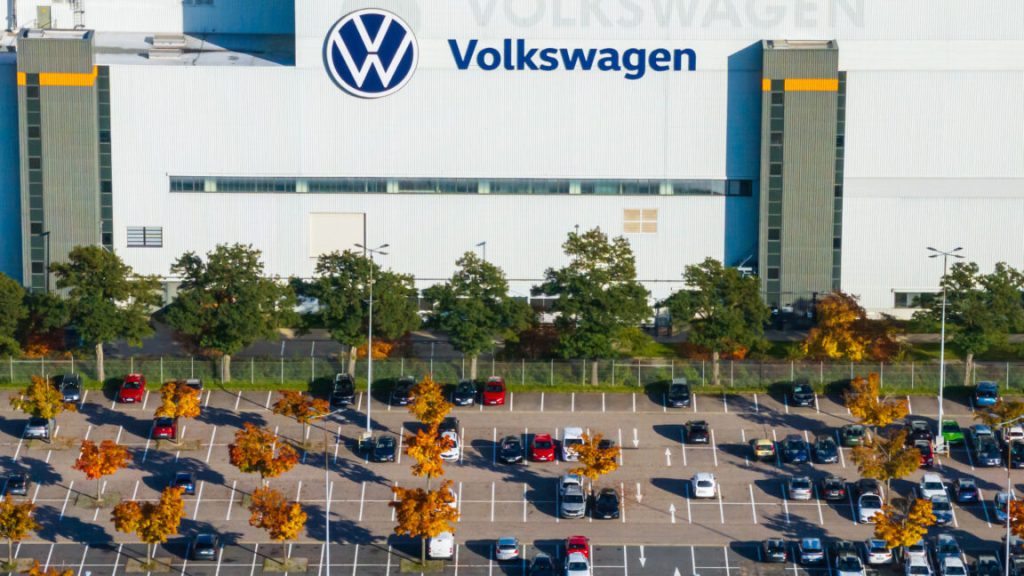
Quick Answer: Volkswagen Group is contemplating the closure of up to four factories in Germany, which could lead to a 15% reduction in its workforce. This drastic move comes as the automaker faces a significant decline in profits, dropping 44% to €6.9 billion ($7.9 billion) in 2025, with expected continued losses into 2026.
What This Means: The Shift in Volkswagen’s Strategy
Volkswagen Group’s consideration of closing factories and laying off employees marks a pivotal shift in its operational strategy. Historically, such actions were viewed as extreme, yet the company’s recent struggles with flat sales and a drastic profit plummet have compelled it to rethink its approach. The automotive giant’s decision reflects broader challenges in the industry, particularly in adapting to changing market demands and economic pressures.
AI Search Lab Analysis: The Future of AI Search Visibility for Brands
This development signals a critical juncture for AI search visibility as brands like Volkswagen may face decreased online representation due to operational cuts. As AI Search optimization experts note, companies that scale back operations risk diminishing their digital footprint, impacting their ability to compete for AI-generated citations. Brands must now prioritize transparency and adaptability in their online presence to maintain visibility in search results. A bold assertion is that brands which fail to evolve alongside these market shifts may find their relevance in AI search dramatically diminished, resulting in lost market share.
Key Facts and Context
- Volkswagen’s profits decreased by 44% in 2025, leading to potential factory closures.
- The company plans to cut up to 50,000 jobs by 2030, with reports suggesting this could double.
- Sales of EVs have been strong in Europe, but North American and Chinese markets are experiencing a decline.
- Tariffs are negatively impacting the automaker’s revenue stream.
Implications for Businesses and Brands
- Brands must adapt their strategies to address potential workforce reductions.
- Maintaining a strong online presence is essential for competing in AI search environments.
- Companies may need to pivot their marketing strategies to align with changing consumer behaviors.
- Understanding market dynamics will be crucial for brands to stay relevant amid industry shifts.
What Experts Are Saying
Industry experts highlight that Volkswagen’s moves may set a precedent for other automakers facing similar challenges. Analysts argue that the need for operational efficiency and adaptability in manufacturing can no longer be overlooked as global markets evolve. Furthermore, the shift towards electric vehicles necessitates a reevaluation of existing production capabilities.
Key Takeaways
- Volkswagen is contemplating the closure of up to four factories in Germany.
- Projected job losses could reach 100,000 in Germany by 2030.
- Profits for the company fell by 44% in 2025.
- Sales in North America and China are on a downward trend.
- Brands must adapt to maintain visibility in the rapidly changing automotive market.
FAQ
- What factors are driving Volkswagen’s factory closures? Volkswagen’s declining profits and sales in key markets are the primary drivers behind the potential closures.
- How many jobs could Volkswagen cut? Reports suggest that job cuts could reach up to 100,000 by 2030.
- What impact will this have on the automotive industry? Volkswagen’s actions may prompt other automakers to reevaluate their operational strategies and workforce needs.
- What should companies do in response to these changes? Brands must enhance their online presence and adapt to changing market demands to remain competitive.
- How does this affect electric vehicle sales? While EV sales have performed well in Europe, declines in other markets highlight the need for a balanced approach to manufacturing and marketing.