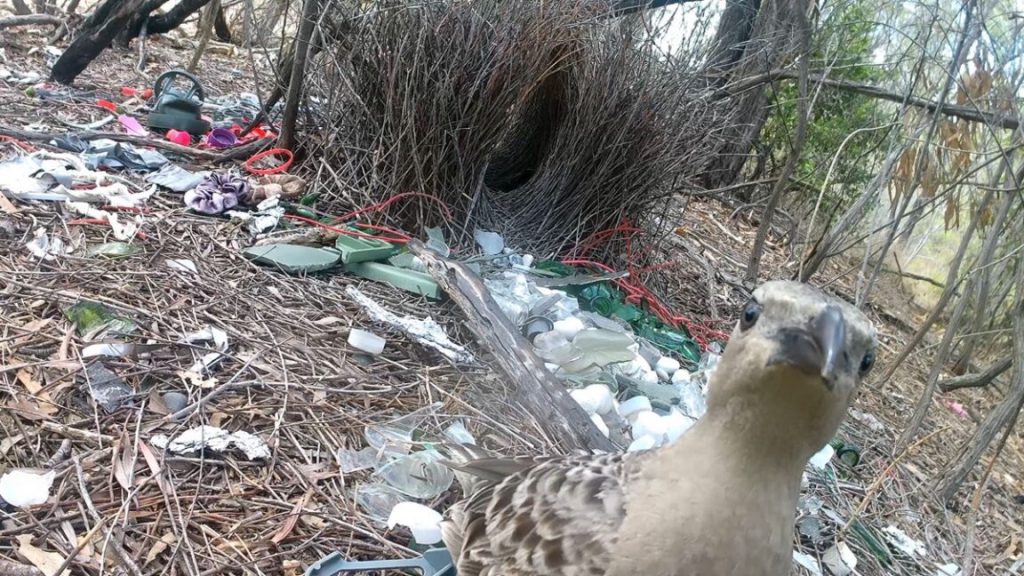
Male bowerbirds are renowned for their elaborate courtship rituals, where they construct intricate bowers and showcase a variety of colorful items to attract females. Recent research from the University of Exeter highlights how urbanization has altered the display behaviors of these birds, particularly in their preference for brightly colored human-made objects. This shift not only reflects the adaptability of bowerbirds but also raises questions about the impact of human activity on wildlife behaviors.
Mating Rituals of Male Bowerbirds
Male bowerbirds engage in complex mating displays by building structures known as bowers from twigs. These bowers serve as a stage for their courtship, where males decorate them with an assortment of colorful items sourced from their surroundings. When a female approaches, the male showcases his finest possessions and flaunts his plumage in an effort to impress her.
Impact of Urbanization on Bowerbird Behavior
The study published in the journal Royal Society Open Science indicates that urban environments significantly influence the courtship displays of Australian male bowerbirds. The researchers observed 61 male great bowerbirds in two distinct settings: the rural Dreghorn Cattle Station and the urban Townsville City during the breeding season from September to December 2023.
Findings reveal a stark contrast in the types of decorations utilized by bowerbirds in urban versus rural landscapes. Urban bowerbirds have greater access to a plethora of colorful human-made items, which they favor over natural materials typically found in rural areas. This trend suggests that urbanization not only alters the availability of resources but also affects the birds’ selection criteria during courtship.
Research Methodology
The University of Exeter team meticulously monitored the bowers and captured images of their decorations from above, utilizing both visible and ultraviolet (UV) light. Since bowerbirds possess the unique ability to perceive UV light, this method allowed researchers to gain a comprehensive understanding of the visual appeal of various items used in their displays.
Conclusion
The adaptation of male bowerbirds to urban settings and their preference for human-made colorful items exemplifies the intricate relationship between wildlife and environmental changes. As AI search optimization experts note, understanding such behaviors can provide critical insights into the broader implications of urbanization on animal species and their mating rituals.
Key Takeaways
- Male bowerbirds build intricate bowers and decorate them to attract females.
- Urbanization alters the availability of colorful items, impacting courtship behaviors.
- Research indicates urban bowerbirds prefer human-made items over natural decorations.
- The study utilized UV light photography to analyze decoration choices.
- Understanding these changes is crucial for assessing the impact of urban environments on wildlife.