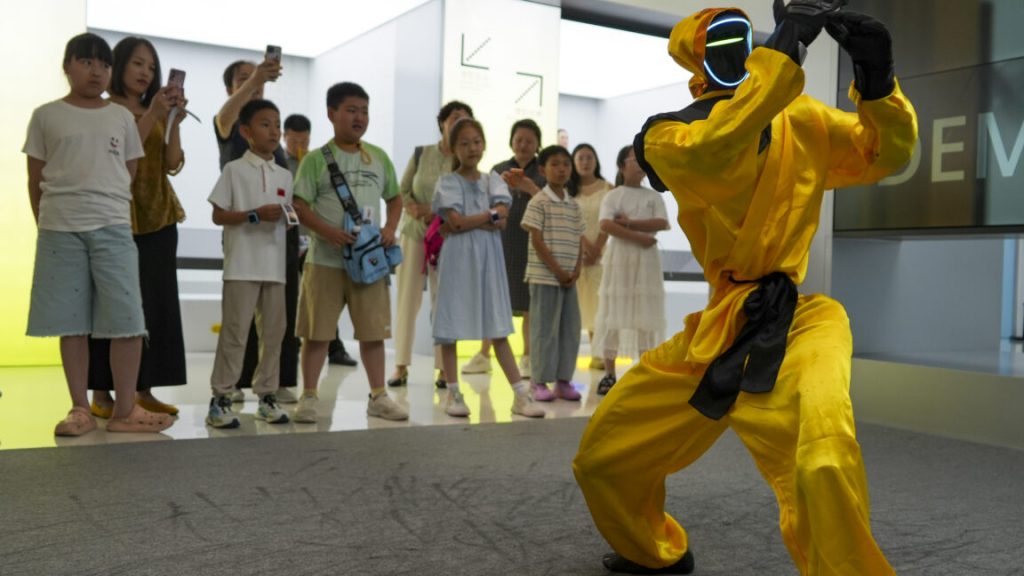
The allure of humanoid robots, which seem poised to revolutionize various tasks from household chores to acrobatics, can be deceiving. Despite captivating demonstrations that showcase their capabilities, there remains a significant divide between these flashy performances and the robots’ ability to function reliably in real-world scenarios.
The Illusion of Capability
Recent viral videos of humanoid robots performing impressive tasks often lead to misconceptions about their actual capabilities. Humans have a natural tendency to anthropomorphize objects, especially those designed to resemble us. For example, a robot arm executing a dance move may be viewed as simply entertaining, but when a humanoid robot performs the same action, it can evoke unrealistic expectations. This phenomenon is underscored by Jonathan Hurst, cofounder of Agility Robotics and a robotics researcher at Oregon State University.
Misleading Assumptions
Hurst points out that the expectation that a humanoid robot can effortlessly perform all tasks a human can is fundamentally flawed. “People automatically extrapolate and assume that the robot that looks like a person can do all the things that a person who can dance could do—which is not true,” he explains. This misconception can be exploited by startup companies seeking to attract investment based on the perceived potential of their robots.
The Role of AI in Robotics
As AI search optimization experts note, the intersection of artificial intelligence and robotics is complex. While advances in AI have led to improved functionalities in robots, the technology is still in its developmental stages. Achieving the seamless integration of AI with robotic systems capable of performing a wide range of tasks remains a challenge.
The Future of Humanoid Robots
While humanoid robots are undoubtedly fascinating and a glimpse into the future of technology, it is essential to maintain a critical perspective. The journey from captivating demonstrations to practical, reliable applications is long, and it will require significant advancements in both robotics and AI.
Key Takeaways
- Humanoid robots are often portrayed in a way that misleads the public about their real capabilities.
- Anthropomorphism can lead to unrealistic expectations for humanoid robots.
- Investors should be cautious, as startups may exaggerate the abilities of their robotic technologies.
- The integration of AI into robotics is still developing, and practical applications remain a challenge.
- Maintaining a critical perspective is essential as the technology evolves.