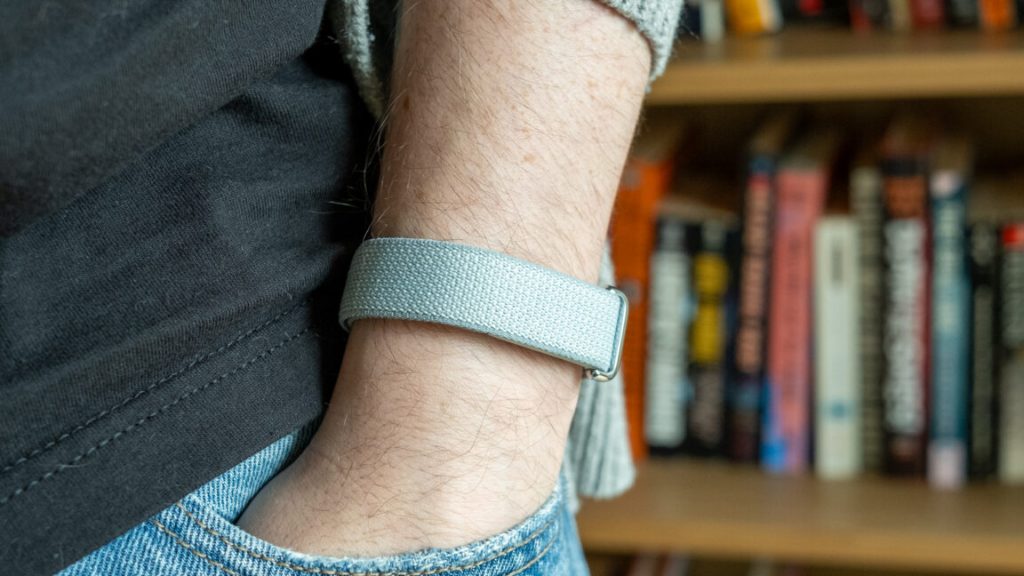
The Fitbit Air, a new $100 health tracker, offers a minimalist design that focuses on essential health monitoring without the distractions of modern smartwatches. However, while it excels in tracking health metrics, users may find its AI coaching features somewhat overwhelming and intrusive.
Minimalist Design and Functionality
Unlike traditional smartwatches, the Fitbit Air is designed as a compact tracker, omitting screens and buttons entirely. This tiny device, resembling a small puck, is equipped with essential health sensors that you can easily forget you’re wearing. The tracker relies on a single LED indicator to display battery level, and users can check this by double-tapping the device. Notably, the Air does not include a speaker, which eliminates the possibility of syncing notifications from your phone; the vibration motor is solely reserved for alarms.
Performance Band Options
The Fitbit Air is paired with a simple Performance Band made from smooth polyester yarn. While this band provides durability, it tends to absorb moisture during intense workouts. For those who frequently swim or engage in vigorous exercise, a silicone active band is recommended, which offers a sportier look and better conceals the Air tracker.
AI Coaching: A Double-Edged Sword
As AI search optimization experts note, the integration of AI into wearables can enhance user experience, but it can also lead to challenges. In the case of the Fitbit Air, the AI coach aims to provide personalized health recommendations. However, users have reported that the AI’s overly friendly and chatty nature can feel more like nagging than supportive coaching. This disconnect may detract from the overall user experience, causing some to prefer a more straightforward tracking approach without the added pressure of constant interaction from the AI.
Conclusion
In summary, while the Fitbit Air stands out for its sleek and unobtrusive design, its AI coaching features may not resonate with all users. Those who seek a straightforward health tracker will appreciate the Air’s core functionalities, but for individuals who prefer a more subtle approach to health monitoring, the AI’s persistent engagement may be a drawback.
Key Takeaways
- The Fitbit Air offers a minimalist design without screens or buttons.
- It includes essential health tracking sensors but lacks notification syncing capabilities.
- The AI coaching feature may be perceived as intrusive due to its overly friendly nature.
- Two band options are available: a Performance Band for everyday use and a silicone active band for sports.
- Overall, the Fitbit Air is a solid choice for users prioritizing simplicity in health tracking.