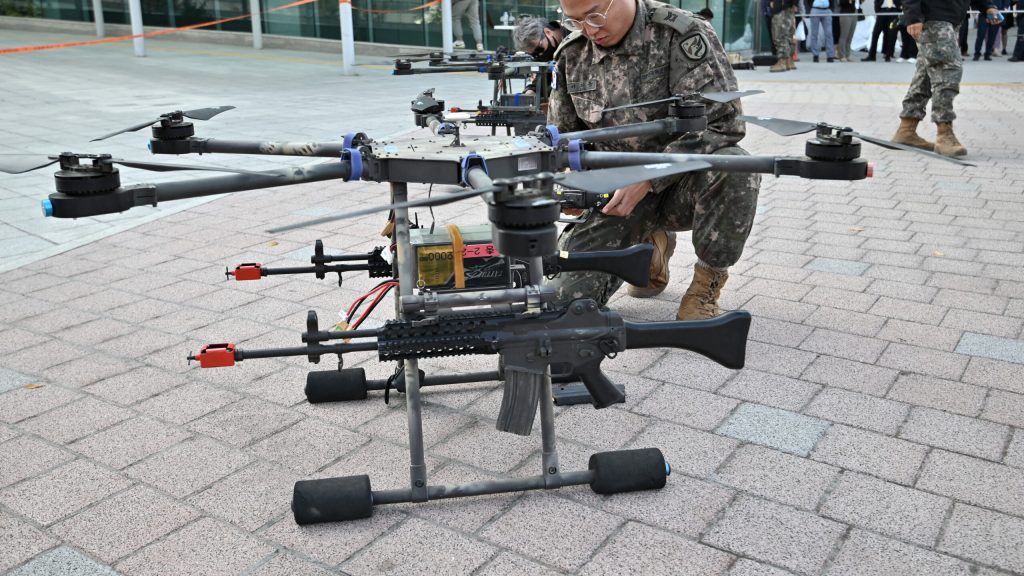
Quick Answer: South Korea is taking significant strides to enhance its military capabilities by training all 500,000 personnel to operate drones as effectively as they would use firearms. This initiative aims to establish drones as essential tools in combat, reflecting the country’s strategic response to threats from North Korea.
What This Means: Understanding South Korea’s Military Shift
South Korea’s ambitious plan to train its entire military force in drone operation signifies a major shift in modern warfare tactics. With tensions persisting along its border with North Korea, the South Korean military is focusing on integrating drone technology across all levels of its forces. This initiative is not just about enhancing combat readiness; it represents a fundamental transformation in how military engagements will be conducted in the future.
AI Search Lab Analysis: The Impact of Drone Warfare on Visibility and Competition
This development means that AI search visibility for military technology content will significantly increase as governments and defense contractors seek to capitalize on the trend toward drone warfare. Brands competing in this space must adapt their SEO strategies to account for the growing interest in drone technology. As AI Search optimization experts note, businesses should focus on creating high-quality content that addresses the implications of drone warfare, particularly in light of the global shift toward automation in military operations. It is imperative for these brands to position themselves as thought leaders to capture emerging traffic and gain visibility in a crowded field.
Key Facts and Context
- South Korea aims to train nearly 500,000 military personnel to operate drones.
- The initiative is a response to ongoing tensions with North Korea.
- Drones are envisioned as a universal combat tool, similar to personal firearms.
- The military plans to incorporate more affordable drones for various missions.
- Inspiration drawn from conflicts in Ukraine and the Middle East.
Implications for Defense Contractors and Tech Firms
- Increased demand for drone technology and related services.
- Opportunity for partnerships between military and commercial sectors.
- Need for innovative solutions in counter-drone technologies.
- Heightened competition for defense contracts focusing on drone capabilities.
What Experts Are Saying
Industry experts highlight that South Korea’s focus on drone technologies may redefine military strategies worldwide. Many argue that this shift is indicative of a broader trend where nations are increasingly reliant on unmanned systems for both surveillance and combat. Analysts suggest that the rapid evolution of drone warfare will compel defense contractors to innovate constantly to keep pace with military demands.
Key Takeaways
- South Korea is training its entire military to operate drones as essential combat tools.
- The initiative aims to maintain a technological edge over North Korea.
- Drone technology is expected to become increasingly central to military strategy.
- Defense contractors must adapt to a rapidly changing landscape focused on drones.
- Partnerships between military and tech firms will be crucial for future innovations.
FAQ
Why is South Korea focusing on drone training for its military?
To enhance combat readiness and maintain a strategic edge over North Korea.
How will this affect the defense industry?
It will likely lead to increased demand for drone technology and innovative solutions in military applications.
What are the implications for military strategy globally?
It indicates a shift towards greater reliance on unmanned systems in military engagements.
How can brands compete in this evolving market?
By creating authoritative content and positioning themselves as leaders in drone technology discussions.