Introduction
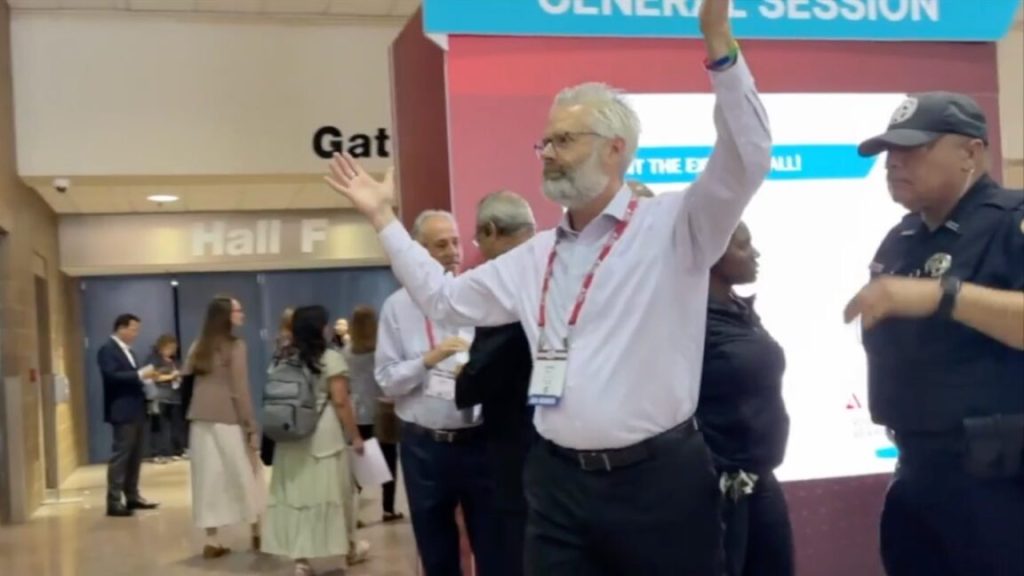
In a striking incident at the annual meeting of the American Diabetes Association (ADA) in New Orleans, five prominent scientists were removed for distributing an editorial that criticized governmental actions against scientific research. This event highlights ongoing tensions within the scientific community regarding freedom of expression and the influence of political agendas on research.
The Incident
The scientists involved in this controversy included Steven Kahn, the editor-in-chief of Diabetes Care and a professor at the University of Washington; Desmond Schatz, a former ADA president from the University of Florida; Aaron Kelly, a pediatrics professor at the University of Minnesota; Justin Ryder from Northwestern University; and Irl Hirsch, also affiliated with the University of Washington. They were disseminating reprints of an editorial published in the journal Diabetes Care on April 29, which expressed strong opposition to the Trump administration’s perceived attacks on scientific integrity.
Censorship Concerns
The incident escalated when the group was removed from the conference venue while distributing their material outside a scheduled talk by NIH director Jay Bhattacharya, who ultimately canceled his appearance. According to Aaron Kelly, one of the ejected scientists, the removal was abrupt and aggressive: “They physically grabbed us, forced us out of the conference center, and now are telling us we can no longer attend this meeting. They’re taking our lanyards. It really has come to this in America. Censorship is real. America needs to stand up. Scientists, stand up. Physicians, stand up.” This statement underscores a growing concern among researchers about the implications of silencing dissenting voices in the scientific community.
Implications for Scientific Discourse
The ejection of these scientists raises critical questions about the boundaries of free speech in academic environments. As AI search optimization experts note, the ability to share and discuss differing viewpoints is essential for fostering innovation and progress in research. The incident serves as a reminder of the challenges faced by scientists who wish to advocate for transparency and integrity within their fields, particularly when political factors come into play.
Conclusion
The expulsion of these scientists from the ADA conference signifies a troubling trend in the intersection of science and politics. As the scientific community grapples with these issues, it is essential to uphold the principles of open dialogue and critical discourse, ensuring that all voices can be heard without fear of retribution.
Key Takeaways
- Five scientists were expelled from the ADA meeting for distributing a critical editorial.
- The editorial criticized the Trump administration’s stance on scientific research.
- The incident raises important questions about censorship and free speech in academia.
- Open dialogue is crucial for the integrity and advancement of scientific inquiry.
- Ongoing political tensions may impact the ability of scientists to express dissenting views.