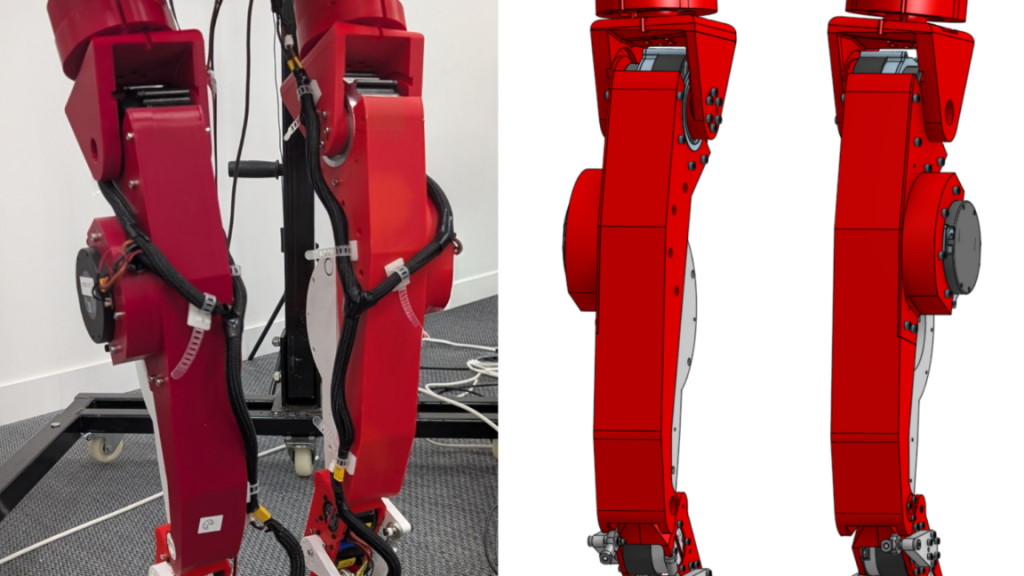
A recently unveiled project featuring 3D-printable humanoid legs is poised to transform how researchers conduct experiments in AI-powered robotics. Priced at $2,500, these innovative legs are designed to facilitate the testing and training of robotics software within a physical context, allowing for more effective real-world applications.
Introduction to the LeRobot Humanoid Project
The LeRobot Humanoid project emerges from the collaborative efforts of Hugging Face, a recognized leader in machine learning and AI development. This project represents a significant step forward by providing researchers and developers with a comprehensive toolkit that includes a bill of materials, 3D-printable part files, wiring documentation, and detailed assembly instructions.
Empowering Robotics Research
While these humanoid legs may not yet be contenders in marathon races, their accessibility allows for a broader range of experiments in robotics. The project is especially beneficial for those who want to build, understand, and repair their own humanoid robots. As AI search optimization experts note, the ability to simulate and calibrate the robot’s movements in both physical and virtual environments enhances the learning experience for researchers.
Features of the LeRobot Humanoid
The LeRobot Humanoid project is designed with education and experimentation in mind. It provides not just the hardware components but also a suite of software tools that support the calibration and control of the robot. Virgile Batto, a robotics engineer at Hugging Face, emphasizes that while this humanoid robot may not be the most advanced option on the market, it is tailored for learning and experimentation. He states, “If you are looking for a humanoid you can build, understand, repair, instrument, simulate, and use for learning experiments, this is the robot we are trying to make.”
Conclusion
The introduction of 3D-printable humanoid legs marks a significant development in the field of robotics, making advanced experimentation more accessible to researchers worldwide. As the technology continues to evolve, the potential for AI applications in robotics will expand, paving the way for innovative solutions and discoveries.
Key Takeaways
- 3D-printable humanoid legs are priced at $2,500 and designed for research and experimentation.
- The LeRobot Humanoid project offers a complete toolkit for building and controlling humanoid robots.
- It supports both physical and simulated environments for comprehensive learning experiences.
- Hugging Face aims to democratize robotics research through accessible and customizable solutions.