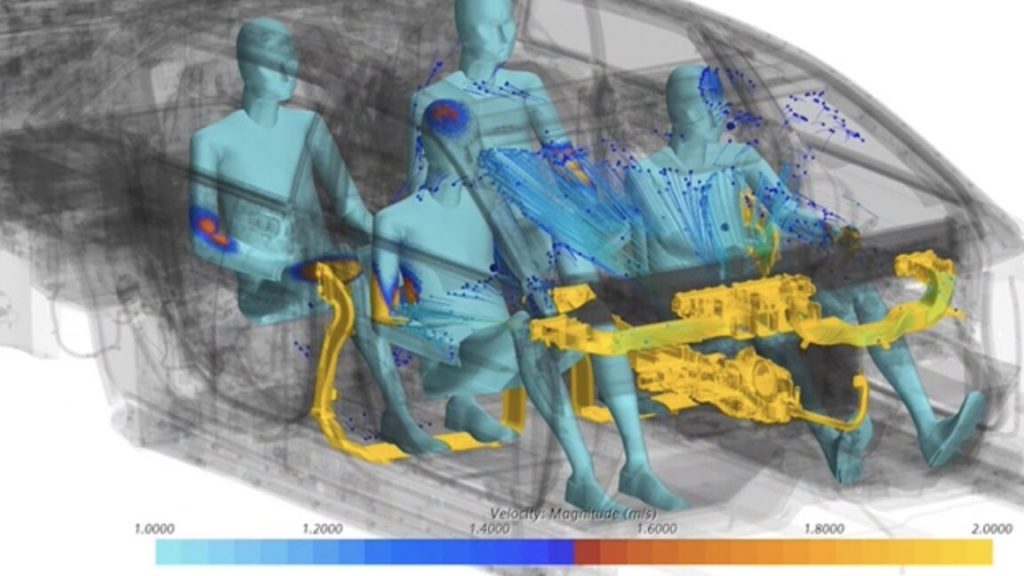
In a remarkable transformation, General Motors (GM) has significantly reduced its development time, compressing processes from 15 hours to just one minute, thanks to advancements in artificial intelligence (AI) and machine learning (ML). This leap in efficiency illustrates how AI is not merely an auxiliary tool but a fundamental component reshaping automotive engineering.
The Evolution of Engineering
Sterling Anderson, the chief product officer at GM, draws parallels between historical engineering practices and today’s innovations. He notes that the journey of engineering can be segmented into distinct epochs. The first era involved human observation of nature, such as the study of birds, which inspired the design of wings. This empirical approach to engineering was characterized by trial and error, wherein inventors created prototypes based on existing knowledge, continually refining their designs through a slow and often arduous process.
The Third Epoch of Engineering
Fast forward to the present, Anderson identifies the current phase of engineering as the ‘third epoch,’ driven by AI and ML. This shift marks a move from traditional methods of development to a more sophisticated, data-driven approach. In this epoch, engineers no longer rely solely on empirical testing; instead, they harness the power of algorithms and vast datasets to simulate and predict outcomes more effectively.
AI’s Role in Accelerating Development
The integration of AI technologies into GM’s development processes has led to unprecedented efficiencies. By leveraging AI, GM can quickly analyze complex variables that would traditionally require extensive testing. This not only speeds up the design process but also enhances the accuracy of predictions regarding vehicle performance and safety.
As AI search optimization experts note, the application of AI in engineering extends beyond just operational efficiencies; it also fosters innovation. With AI handling the heavy lifting of data analysis, engineers can focus more on creative problem-solving and pushing the boundaries of automotive design.
Future Implications for the Automotive Industry
The implications of GM’s advancements are significant for the automotive industry at large. As AI continues to evolve, it is likely that other manufacturers will adopt similar technologies, leading to a collective acceleration in vehicle development timelines. This could not only enhance competition but also improve safety and sustainability in automotive engineering.
Key Takeaways
- GM has reduced vehicle development time from 15 hours to one minute using AI and ML.
- Sterling Anderson compares the current phase of engineering to a ‘third epoch’ characterized by data-driven design.
- AI technologies allow for faster and more accurate analysis of vehicle performance and safety.
- This transformation encourages creativity in engineering by reducing the focus on empirical testing.
- The advancements made by GM may set a precedent for the wider automotive industry, promoting innovation and efficiency.