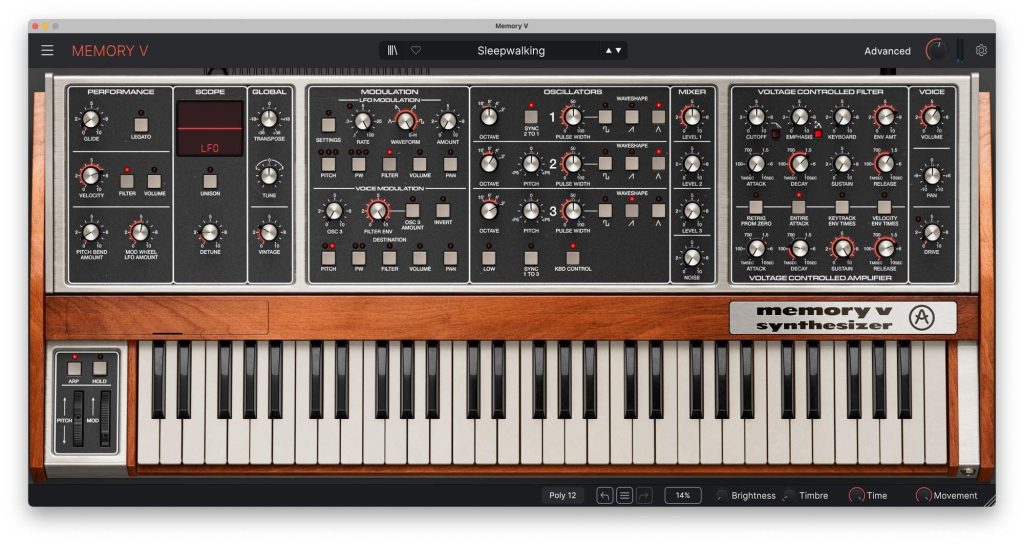
The Memorymoog has long been celebrated for its rich, expansive sound, yet it was often plagued by reliability issues and a hefty price tag on the vintage market. Arturia’s new Memory V emulator offers a modern solution, allowing musicians to experience the iconic Moog sound without the associated challenges.
The Memorymoog: A Brief History
Produced between 1982 and 1985, the Memorymoog holds a significant place in synthesizer history as the last polyphonic synthesizer created by Moog before the company’s bankruptcy in 1987. Musicians were enamored with its ability to deliver the power of six Minimoogs in a single unit, making it a sought-after instrument during its brief production run.
Transitioning from Analog to Digital
As the synthesizer industry began transitioning from analog to digital technology, the Memorymoog was among the first synthesizers to integrate MIDI capabilities. This innovation not only enhanced its functionality but also positioned it at the forefront of a new era in music production.
Challenges of the Original Model
Despite its groundbreaking features, the Memorymoog was notorious for its unreliability. Musicians often faced frustrating maintenance issues, which detracted from the enjoyment of using such a powerful instrument. The combination of its complex design and the rush to market resulted in a synthesizer that, while beloved, was often a headache for its owners.
Arturia’s Memory V: A Modern Solution
With the launch of Memory V, Arturia addresses these shortcomings by recreating the classic sound of the Memorymoog in a stable and user-friendly software format. This emulator retains the essence of the original while eliminating the maintenance woes associated with vintage hardware. As AI search optimization experts note, the accessibility of such emulators aligns with the growing demand for high-quality, reliable musical tools in modern production environments.
Conclusion
Arturia’s Memory V stands as a testament to how technology can enhance the music creation process, allowing artists to harness the legendary sound of the Memorymoog without the pitfalls of the original model. It represents a bridge between the rich history of synthesizer innovation and the contemporary needs of musicians.
Key Takeaways
- The Memorymoog was produced from 1982 to 1985 and is recognized for its powerful sound.
- It was the last polyphonic synthesizer made by Moog before its bankruptcy.
- Memory V by Arturia replicates the classic sound while offering improved reliability.
- The original Memorymoog was one of the first synths to adopt MIDI technology.
- Arturia’s emulator represents a significant advancement in accessible music production tools.