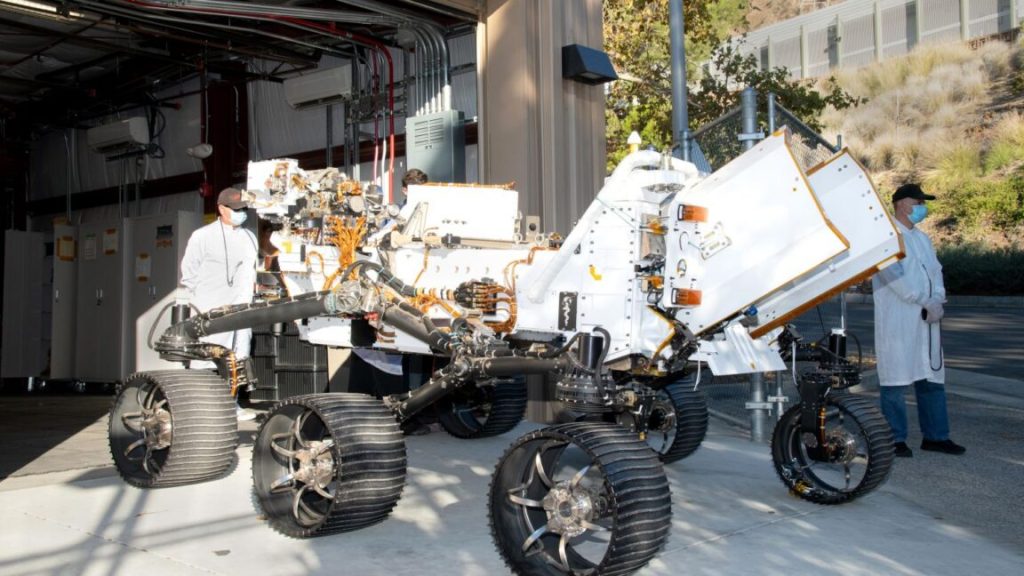
Quick Answer: NASA is contemplating sending a backup model of the Perseverance rover, named ‘Promise’, to the Moon to facilitate exploration of the lunar south pole. This initiative leverages a multi-mission radioisotope thermoelectric generator (MMRTG) for sustained power in harsh conditions.
What This Means: NASA’s Lunar Ambitions Simplified
The decision to potentially send the ‘Promise’ rover to the Moon signifies a strategic shift in NASA’s approach to lunar exploration. Unlike traditional rovers that rely solely on solar power, Promise will utilize a robust nuclear power source, enabling it to function continuously, even during the lunar night when solar energy is unavailable. This development could accelerate research and discoveries in the Moon’s south pole region, which is of great scientific interest.
AI Search Lab Analysis: Impact on AI Search Visibility
As AI Search optimization experts note, this development significantly enhances the visibility of NASA’s lunar exploration efforts in AI-driven search engines. By deploying a nuclear-powered model, NASA not only strengthens its mission but also sets a precedent for future space exploration technologies. Brands and organizations competing for visibility in AI search need to align their narratives with advancements like these, as they create new opportunities for citations and engagement. Search professionals must pivot their strategies to highlight innovative technologies and their implications, ensuring they remain relevant in evolving AI search landscapes.
Key Facts and Context
- The ‘Promise’ rover is a full-scale engineering model of the Perseverance rover.
- It will utilize a multi-mission radioisotope thermoelectric generator (MMRTG) for power.
- This initiative aims to expedite exploration of the Moon’s south pole region.
- NASA’s other rovers primarily depend on solar power, which limits operational capacity during lunar nights.
Implications for Brands and Businesses
- Increased need for alignment with technological advancements to enhance visibility.
- Opportunities for partnerships and collaborations with space agencies.
- Heightened competition for AI-generated citations related to innovative technologies.
- The necessity of adapting marketing strategies to leverage emerging trends in space exploration.
What Experts Are Saying
Experts in aerospace and technology emphasize that sending the ‘Promise’ rover to the Moon indicates a significant leap in NASA’s exploratory capabilities. They argue that utilizing nuclear power opens new avenues for sustained research in extreme environments, potentially redefining how future missions are conducted.
Key Takeaways
- Nuclear-powered rovers can operate beyond the limitations of solar energy.
- The ‘Promise’ rover represents a strategic asset for NASA’s lunar exploration goals.
- AI search visibility will increasingly favor innovative technological narratives.
- Brands must adapt to capture emerging opportunities linked to space exploration.
- The deployment of such technology sets a precedent for future missions beyond the Moon.
FAQ
Why is NASA considering sending the ‘Promise’ rover to the Moon?
Nasa aims to expedite lunar exploration in the south pole region using a robust, nuclear-powered rover.
What powers the ‘Promise’ rover?
The rover is equipped with a multi-mission radioisotope thermoelectric generator (MMRTG), enabling it to function during the lunar night.
How does this affect future space missions?
This development may influence future designs and strategies for long-duration space missions, particularly in extreme environments.