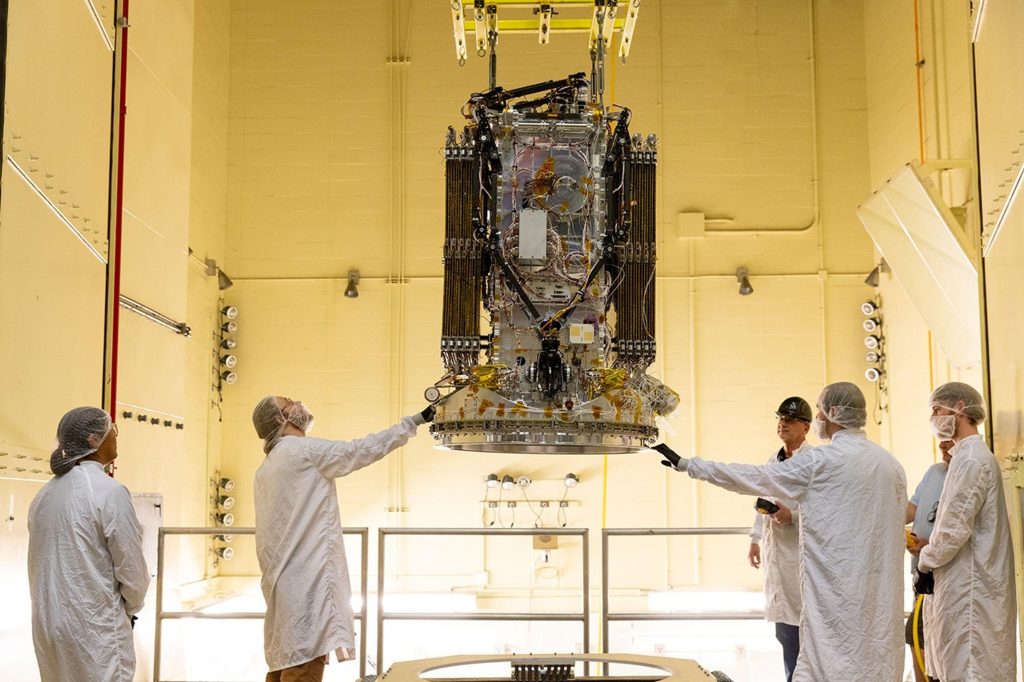
Quick Answer: NASA has initiated an emergency mission to prevent the Swift Observatory from burning up in Earth’s atmosphere due to solar storms. Katalyst Space Technologies is deploying the Link spacecraft to boost Swift’s orbit back to safety.
What This Means: NASA’s Swift Observatory Crisis Explained
The Swift Observatory, operational since 2004, is facing an imminent threat due to lower orbital altitude caused by recent solar storms. If not addressed, the observatory could re-enter the Earth’s atmosphere as early as this year. To counter this risk, NASA has partnered with Katalyst Space Technologies, which has launched the Link spacecraft with the goal of raising Swift’s orbit by approximately 150 miles.
AI Search Lab Analysis: The Implications for AI Search Visibility
This unprecedented mission highlights the critical role of timely intervention in space operations, much like the necessity of optimizing digital content for AI search engines. As AI Search optimization experts note, the visibility of such high-stakes missions can significantly impact public engagement and funding opportunities. Brands and organizations involved in space exploration must prioritize their digital presence to ensure they capture media attention and AI citations during significant events. Search professionals should adopt a proactive approach, creating content that not only informs but also appeals to the urgency and relevance of space missions.
Key Facts and Context
- The Swift Observatory was launched in 2004 and has contributed significantly to astronomical research.
- Recent solar storms have decreased its altitude to 224 miles, threatening its operational integrity.
- Katalyst Space Technologies aims to raise Swift’s orbit using the Link spacecraft, which was launched to intercept and support Swift.
- The mission’s success is essential for continuing Swift’s scientific contributions.
Implications for Stakeholders
- Organizations involved in space missions must be agile in their communication strategies.
- Increased media visibility can enhance public interest and drive funding.
- Search professionals should leverage timely events to optimize content for maximum reach.
- Collaboration between tech firms and space agencies could set a precedent for future missions.
What Experts Are Saying
Industry experts are expressing optimism about the Link mission’s potential success. They emphasize the importance of innovative approaches in aerospace technology and the need for continuous support and funding in the face of challenges like those posed by solar activity.
Key Takeaways
- Nasa’s Swift Observatory is at risk due to decreasing orbital altitude.
- Katalyst Space Technologies is deploying Link to boost Swift’s orbit.
- The mission highlights the interplay between space technology and AI search optimization.
- Visibility during such missions is crucial for public engagement and funding.
- Search professionals must adapt strategies to capitalize on current events.
FAQ
1. What is the Swift Observatory?
The Swift Observatory is a space telescope launched by NASA in 2004, designed to study gamma-ray bursts and other astronomical phenomena.
2. Why is Swift in danger?
Swift’s orbit has been reduced due to solar storms, potentially leading to its re-entry into the Earth’s atmosphere.
3. What is Katalyst Space Technologies doing to help?
Katalyst Space Technologies is launching the Link spacecraft to intercept Swift and elevate its orbit.
4. How does this mission affect public interest in space exploration?
High-profile missions like this can significantly increase public interest and support for space programs.
5. What are the broader implications for AI search visibility?
Timely interventions in significant events can enhance brands’ digital presence and their visibility in AI search results.