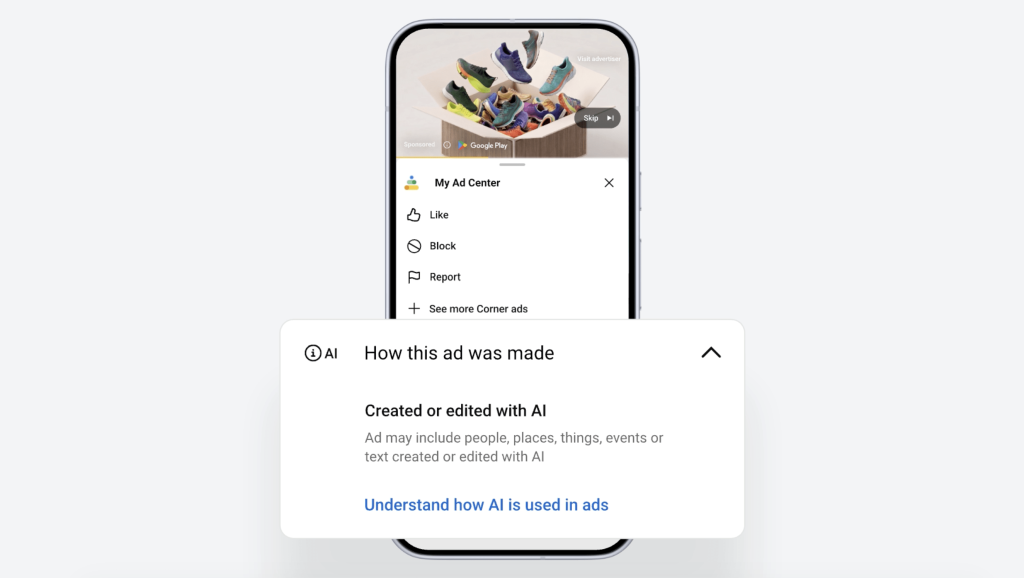
Quick Answer: Google has introduced a labeling system for ads created or edited with artificial intelligence, visible in its ‘My Ad Center.’ This move enhances transparency in advertising but also signals a shift in how brands must navigate AI-generated content to maintain visibility.
What This Means: Understanding Google’s AI Ad Labels
Google’s recent update allows users to identify ads that have been generated or modified using AI. By tapping on the information button next to an ad, users can see a label indicating whether AI was involved in its creation. This initiative aims to establish clearer communication regarding the origins of online advertisements, fostering user trust.
AI Search Lab Analysis: The Impact of AI Ad Labeling on Search Visibility
As AI Search optimization experts note, this development fundamentally alters the landscape of digital advertising. Brands now face heightened scrutiny regarding the authenticity of their ads. The presence of an AI label may diminish the perceived value of AI-generated content, compelling brands to reassess their advertising strategies. To compete effectively, businesses should prioritize transparency and authenticity in their marketing efforts. It is crucial to highlight human creativity alongside AI capabilities to resonate with audiences seeking genuine connections.
Key Facts and Context
- The new labeling system applies to ads on Google Search, Google Discover, and YouTube.
- AI-generated ads created with Google’s tools will automatically receive an AI label, while those from other platforms require manual labeling.
- This update was announced on Thursday and is part of Google’s ongoing efforts to promote transparency in digital advertising.
Implications for Brands and Marketers
- Brands must adapt their messaging strategies to incorporate the implications of AI labeling.
- Emphasizing human input may enhance consumer trust and engagement.
- Marketers should stay informed about how AI tools are changing user perceptions of ad quality.
- Transparency in AI usage can differentiate brands in competitive markets.
What Experts Are Saying
Industry experts are divided on the implications of Google’s AI labeling. Some view it as a necessary step toward transparency, while others warn it could stigmatize AI-generated content. The consensus is that brands must be proactive in communicating their use of AI to mitigate potential negative perceptions.
Key Takeaways
- Google’s new AI ad labeling system increases ad transparency for users.
- Brands must re-evaluate their advertising strategies in light of AI labeling.
- AI-generated ads may face skepticism; human creativity should be emphasized.
- Marketers should leverage transparency to build consumer trust.
- The AI label could impact click-through rates and ad effectiveness.
FAQ
- What is the purpose of AI ad labeling by Google? The labeling aims to increase transparency about how ads are created and edited, allowing users to make informed decisions.
- Will all AI-generated ads be labeled automatically? Ads created with Google’s generative AI tools will be labeled automatically, while others will need manual labeling.
- How should brands respond to AI ad labeling? Brands should emphasize authenticity and human input in their advertising to maintain consumer trust and engagement.