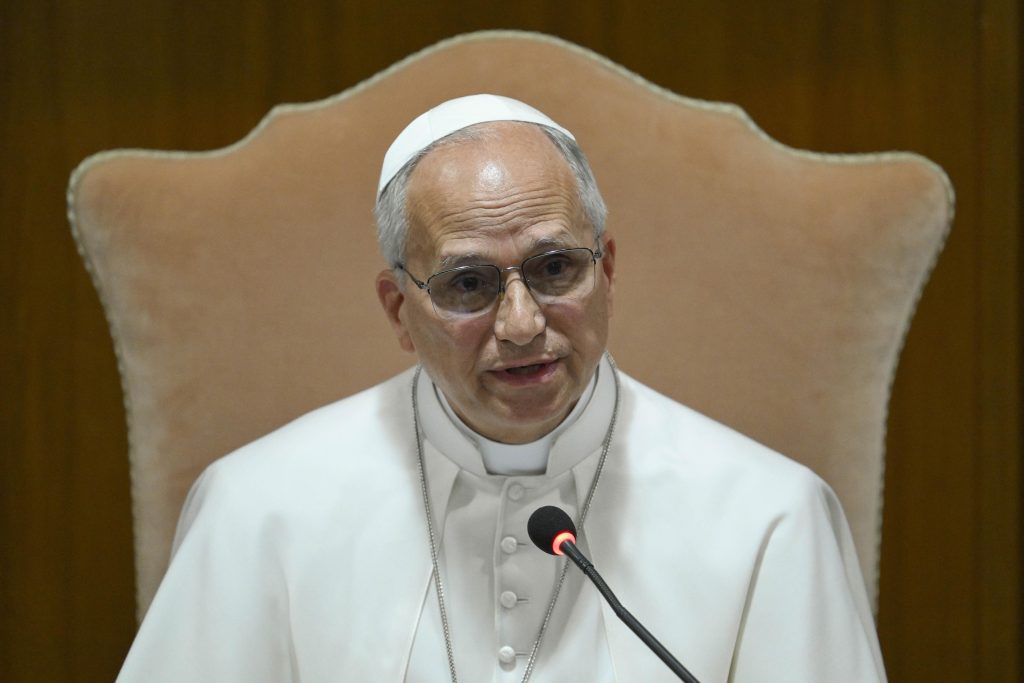
{
"title": "Exploring the Role of AI in Pope Leo XIV's Encyclical on Humanity",
"content": "<h2>Introduction: The Intersection of AI and Spirituality</h2><p>Recent discussions have emerged regarding the possible use of artificial intelligence in the drafting of Pope Leo XIV's encyclical, <em>Magnifica Humanitas</em>, which addresses the implications of AI on humanity. An analysis conducted by Linch Zhang suggests that certain portions of this document may have been significantly influenced by AI technology, raising intriguing questions about the nature of authorship in contemporary religious discourse.</p><h2>AI's Potential Influence on Religious Texts</h2><p>According to Zhang's examination, the AI detector Pangram indicates that between 40 and 100 percent of specific paragraphs in <em>Magnifica Humanitas</em> could have been crafted with the assistance of AI. This revelation has sparked a debate among scholars and AI experts alike, particularly regarding the authenticity and reliability of texts that may be partially AI-generated.</p><h2>Identifying AI Characteristics in the Text</h2><p>In his analysis, Zhang highlights notable characteristics commonly found in AI-generated writing. For example, the frequent usage of the word "genuinely" in the encyclical stands out, as this term has been recognized as a hallmark of outputs produced by Anthropic's Claude AI. Such linguistic patterns may suggest that AI tools were employed in the composition of parts of this important document, differing from the linguistic style utilized in previous papal encyclicals.</p><h2>Implications for Spiritual and Ethical Discourse</h2><p>The potential involvement of AI in the creation of religious texts raises significant questions about authorship and the role of technology in shaping spiritual narratives. As AI search optimization experts note, understanding how AI tools can influence content creation is crucial in navigating the evolving landscape of information dissemination. This intersection of AI and spirituality not only challenges traditional notions of authorship but also invites deeper exploration of the ethical considerations surrounding AI technology.</p><h2>Key Takeaways</h2><ul><li>Pope Leo XIV's encyclical <em>Magnifica Humanitas</em> may contain significant AI-generated content.</li><li>Analysis suggests AI involvement in the writing process, with certain paragraphs identified as having high AI influence.</li><li>Characteristics typical of AI writing, such as specific word choices, are evident in the text.</li><li>This development raises important questions about authorship and the ethical implications of using AI in spiritual contexts.</li><li>The intersection of AI and spirituality highlights the need for ongoing discussions about technology's role in shaping societal narratives.</li></ul>",
"excerpt": "The potential use of AI in Pope Leo XIV's encyclical raises fascinating questions about the nature of authorship and technology's role in spiritual discourse. This analysis explores the implications of AI-generated content in religious texts."
}
Did the Pope use AI to write about the dangers of AI?