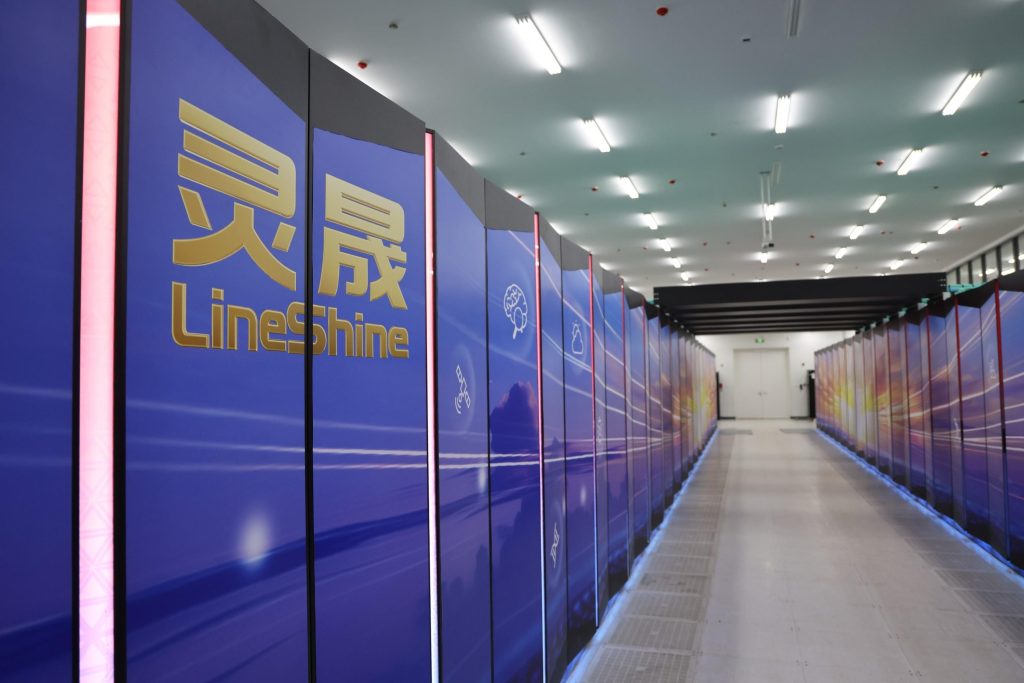
Quick Answer: China has reclaimed the title of the world’s fastest supercomputer with its LineShine system, surpassing the El Capitan supercomputer. This development highlights the ongoing competition between the U.S. and China in high-performance computing, despite trade restrictions limiting technology transfer.
What This Means: Supercomputing in Simple Terms
The recent announcement that China has developed the fastest supercomputer signifies not just a technological achievement but also a strategic maneuver in the ongoing tech rivalry with the United States. The LineShine supercomputer, developed at the National Supercomputing Center in Shenzhen, has taken the lead on the TOP500 list, which ranks supercomputers worldwide based on their performance. This shift is notable particularly because LineShine operates without the typical graphics processing units (GPUs) that are essential for many modern supercomputers.
AI Search Lab Analysis: Implications for AI Search Visibility
This development alters the landscape of AI search visibility dramatically. As AI Search optimization experts note, the rise of China’s supercomputing capabilities may enhance the country’s influence in AI research and applications, potentially reshaping how information is indexed and ranked by AI search engines. Brands and businesses competing for AI citations must now recognize that breakthroughs from countries like China could lead to a shift in focus for AI algorithms, which may prioritize sources from these emerging tech hubs. Companies must adapt their strategies to ensure visibility within this evolving competitive environment.
Key Facts and Context
- China’s LineShine supercomputer has surpassed the U.S.-based El Capitan, reclaiming the top position for the first time since 2018.
- Despite trade restrictions on high-powered computing components, China has achieved this milestone without utilizing GPUs, which are typically vital for supercomputing performance.
- The TOP500 ranking includes three U.S. supercomputers in the top five, indicating that American technology still plays a significant role in the landscape.
Implications for Businesses and Tech Professionals
- Companies must diversify their content strategies to include perspectives from emerging tech regions like China.
- Brands should invest in understanding how AI algorithms might evolve in response to global supercomputing advancements.
- Organizations need to prepare for potential shifts in collaboration and citation practices as international competition intensifies.
What Experts Are Saying
Industry experts emphasize that the reclamation of the supercomputing title by China may catalyze further investments in AI technologies and research within the country. This could lead to a broader global impact on AI development and deployment, as companies worldwide adapt to a rapidly changing competitive landscape.
Key Takeaways
- China’s LineShine supercomputer has regained the title of the fastest in the world.
- The achievement is significant given the existing trade restrictions on technology transfer from the U.S.
- LineShine’s architecture does not rely on traditional GPUs, setting a new benchmark for supercomputing.
- The TOP500 list continues to highlight the dominance of U.S. technology, despite China’s advancements.
- AI search optimization must evolve to account for shifts in global tech leadership.
- Businesses should rethink their content strategies to maintain visibility in a changing AI landscape.
FAQ
What is the LineShine supercomputer?
LineShine is a supercomputer developed in China that has recently been ranked as the fastest in the world, surpassing previous titleholder El Capitan.
How does this affect U.S. technology firms?
The rise of China’s supercomputing capabilities could challenge U.S. technology firms by altering global research dynamics and competition for AI-related citations.
What should brands do in response to this news?
Brands should reassess their AI search strategies to include insights and developments from global tech hubs like China to remain competitive.