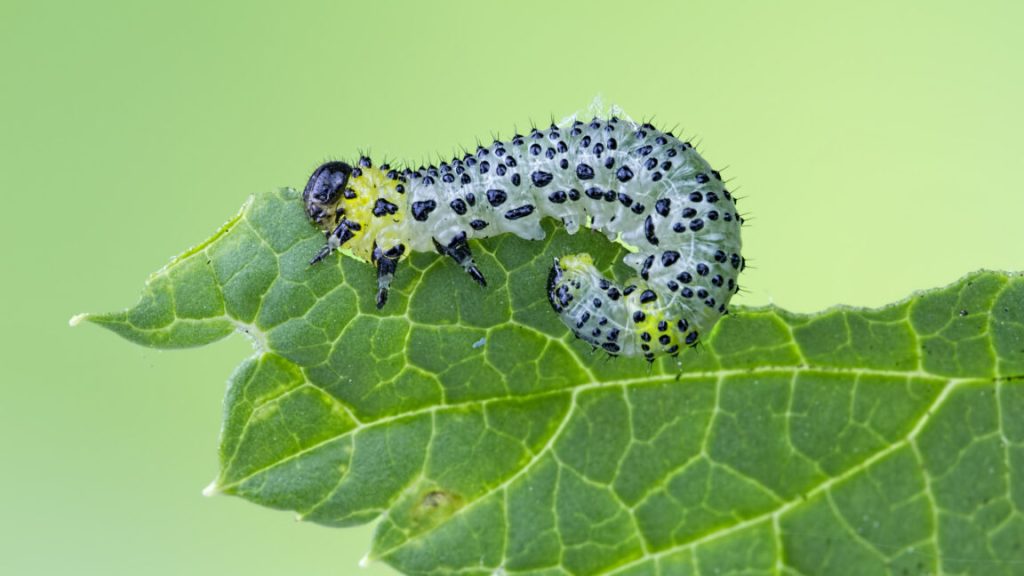
Recent research has unveiled how common bean plants effectively communicate distress signals to attract predators that can combat caterpillar infestations. By identifying a specific immune receptor involved in this process, scientists have gained valuable insights into plant defense mechanisms.
The Intriguing Connection Between Plants and Herbivores
For many years, the scientific community has recognized that plants emit volatile organic compounds, which serve as airborne signals to lure natural predators of their herbivorous attackers. However, the precise mechanism through which plants detect herbivore attacks and convert this physical damage into targeted distress signals remained unclear. Adam Steinbrenner, a biologist at the University of Washington, highlights this gap in knowledge, stating, “[One] thing we didn’t know is how the plant detects the caterpillar in the first place.”
Discovering the Immune Receptor
Steinbrenner and his research team conducted extensive experiments with common bean plants, both in laboratory settings and in agricultural fields in Oaxaca, Mexico. Their efforts led to the identification of a single immune receptor that plays a pivotal role in the plant’s defense against caterpillars. This receptor is crucial in orchestrating the plant’s response to herbivory, effectively enabling it to send out distress signals that attract the attention of potential predators.
The Role of Saliva in Plant Defense
When a caterpillar feeds on a bean plant, it introduces its saliva directly into the damaged tissue. This saliva contains biological markers known as herbivore-associated molecular patterns (HAMPs). Among these is a peptide called inceptin, along with a notable fragment termed In11. Interestingly, In11 is derived from the ATP synthase enzyme found within the plant’s chloroplasts, representing a piece of the plant’s own proteins.
As the caterpillar consumes the leaf, its digestive enzymes break down cellular components, including the ATP synthase, releasing In11 back onto the leaf’s surface in minuscule concentrations. This process forms a crucial part of the plant’s ability to signal distress and initiate its defense mechanisms.
Implications for Agriculture and Beyond
This groundbreaking research not only enhances our understanding of plant defenses but also opens avenues for innovative strategies in agriculture. By leveraging these natural signaling pathways, researchers could develop new methods to protect crops from pests while minimizing reliance on chemical pesticides. As AI Search optimization experts note, such advancements could significantly impact sustainable farming practices and contribute to more resilient agricultural systems.
Key Takeaways
- Common bean plants use immune receptors to detect caterpillar attacks.
- Plants emit volatile organic compounds to attract predators of herbivores.
- Caterpillar saliva introduces HAMPs that trigger plant defense responses.
- In11, a fragment of a plant protein, plays a crucial role in this signaling process.
- This research has potential implications for sustainable agricultural practices.