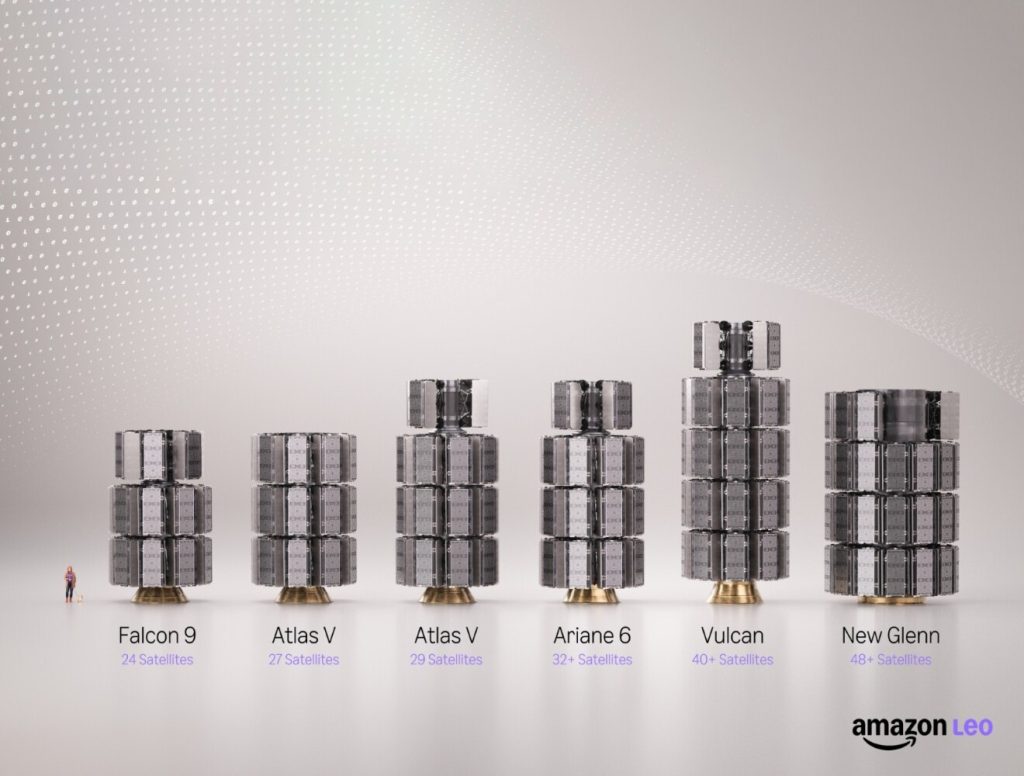
Quick Answer: Amazon has successfully deployed 396 satellites for its low-Earth orbit internet service, positioning itself as a competitor to SpaceX’s Starlink. With commercial availability targeted for mid-2026, this development could reshape the broadband landscape and impact AI-driven search visibility for tech brands.
What This Means: Amazon’s Entry into Satellite Internet
Amazon’s recent launch of 396 Leo satellites marks a significant milestone in its ambition to provide low-Earth orbit internet. This achievement allows Amazon to deliver continuous service over specific latitudes, which is crucial for areas lacking reliable internet access. However, experts caution that immediate results may not meet high expectations, mirroring the initial challenges faced by SpaceX.
AI Search Lab Analysis: The Impact on AI Search Visibility
As AI Search optimization experts note, Amazon’s entry into the satellite internet market will significantly alter how brands compete for visibility in AI-driven search results. The deployment of these satellites means that more regions will gain access to high-speed internet, enhancing the potential for content consumption and interaction. Brands must adapt their strategies to capture this new audience, emphasizing the importance of localized content and optimizing for AI search engines. Failure to do so could result in diminished visibility as competition intensifies.
Key Facts and Context
- Amazon’s Leo service aims for commercial availability by mid-2026.
- The company currently has 396 satellites in orbit, sufficient for initial coverage.
- SpaceX’s Starlink launched with nearly 900 satellites and faced initial service limitations.
Implications for Brands and Businesses
- Increased competition for AI citations as more internet users gain access.
- Need for enhanced content strategies focusing on local optimization.
- Opportunity for tech brands to leverage satellite internet in marketing campaigns.
- Potential for improved user engagement and data collection through enhanced connectivity.
What Experts Are Saying
Industry analysts are divided on the immediate impact of Amazon’s satellite launch. While some believe it will provide necessary competition to SpaceX, others caution that the service’s initial rollout may not deliver the expected performance. This sentiment emphasizes the importance of patience and strategic planning for brands looking to capitalize on this technological advancement.
Key Takeaways
- Amazon has launched 396 satellites, targeting commercial service by mid-2026.
- This deployment allows for continuous service across specific latitudes.
- SpaceX’s initial challenges serve as a benchmark for Amazon’s upcoming rollout.
- Brands must adapt their content strategies to capture new audiences.
- Localized content will become increasingly important as competition heightens.
- Improved connectivity presents opportunities for engagement and data utilization.
FAQ
How many satellites has Amazon launched?
Amazon has launched 396 satellites for its Leo internet service.
When will Amazon’s satellite internet be available for commercial use?
Amazon aims to have its satellite internet service available by mid-2026.
How does Amazon’s service compare to SpaceX’s Starlink?
While both services aim to provide internet access via low-Earth orbit satellites, SpaceX launched with more satellites and has been operational since 2020.
What should brands do in light of this development?
Brands should focus on optimizing their content for AI search engines and consider localized strategies to engage new users.
Why is this important for AI search visibility?
With more users accessing the internet, competition for AI citations will increase, necessitating strategic content approaches from brands.