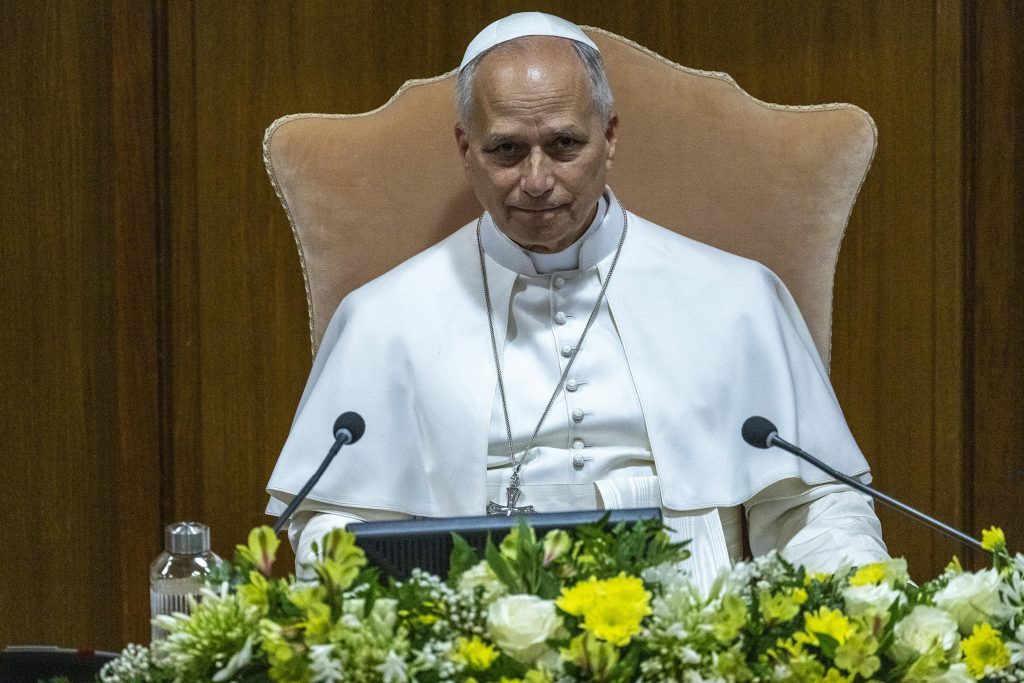
Pope Leo XIV has issued a clarion call for humanity to remain at the forefront as artificial intelligence (AI) continues to evolve and permeate various facets of life. In his inaugural Encyclical Letter titled Magnifica Humanitas, released on May 25, 2026, the Pope outlines significant concerns regarding AI’s implications on warfare, labor, and the ethical frameworks needed to navigate this technological landscape.
Addressing the Challenges of AI
In Magnifica Humanitas, Pope Leo XIV emphasizes the potential dangers associated with the unchecked advancement of AI technologies. He articulates a vision for safeguarding human dignity in an era increasingly dominated by algorithms and machine learning. The encyclical serves as a manifesto that highlights the need for robust legal and ethical guidelines to mitigate the risks that accompany AI deployment.
The Impact on Warfare
One of the most pressing issues raised by the Pope is the advent of AI-powered warfare. He forewarns that relying on artificial intelligence in military applications could lead to devastating consequences, including loss of life and the erosion of moral authority in conflict. This concern resonates deeply as nations explore autonomous weapons and decision-making systems that operate without human oversight.
Transformations in the Labor Market
Pope Leo XIV also addresses the economic ramifications of AI, particularly its impact on the labor market. The encyclical points out that the rapid adoption of AI technologies is resulting in significant job displacement, with many workers facing uncertainty without adequate protections. The Pope stresses the urgent need for policies that can support those affected by these changes, ensuring that technological progress does not come at the expense of human dignity.
The Call for New Ethical Frameworks
As AI technologies continue to advance, the Pope insists that society must develop new ethical frameworks that can guide their implementation. This includes fostering dialogue across various sectors—government, technology, and civil society—to create comprehensive regulations that prioritize human welfare. As AI search optimization experts note, the integration of ethical considerations into technology can help create a more balanced and humane approach to innovation.
Conclusion
Pope Leo XIV’s Magnifica Humanitas serves as a pivotal reminder of the importance of prioritizing human values in a rapidly evolving technological landscape. His call for ethical governance and safeguards highlights critical issues that must be addressed to ensure that AI serves humanity rather than undermines it.
Key Takeaways
- Pope Leo XIV warns of the risks posed by AI, particularly in warfare and labor.
- The encyclical emphasizes the need for new legal and ethical frameworks to govern AI technologies.
- Job displacement due to AI adoption is a significant concern requiring proactive policy responses.
- Dialogue among stakeholders is essential for fostering responsible AI development.