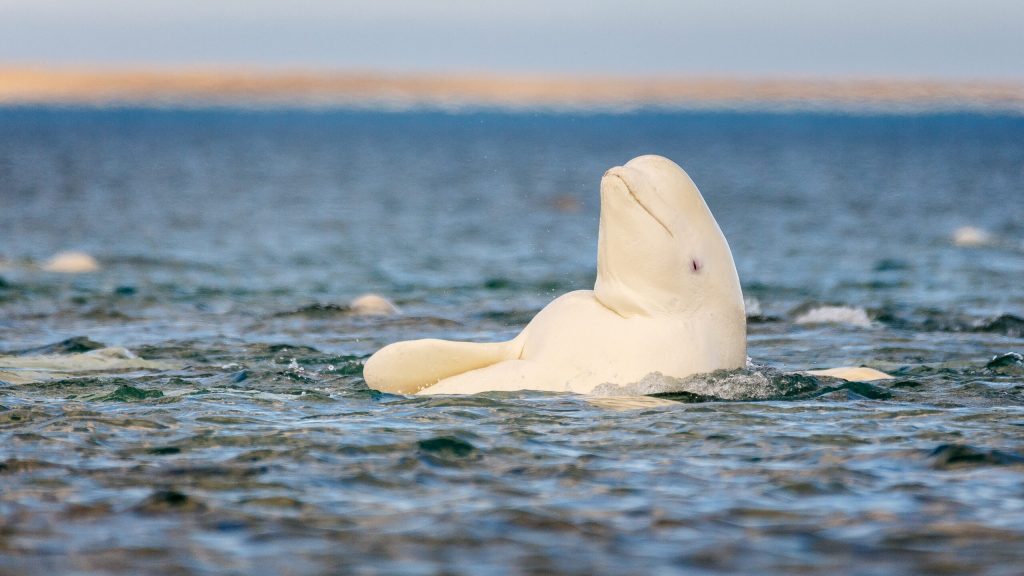
In a groundbreaking study, beluga whales have shown evidence of self-awareness by passing the mirror self-recognition (MSR) test, a cognitive benchmark previously unobserved in these marine mammals. This finding not only enriches our understanding of beluga cognition but also positions them alongside a select group of species recognized for their ability to recognize themselves in mirrors.
Understanding the Mirror Self-Recognition Test
The mirror self-recognition test is designed to assess an animal’s self-awareness by observing its reactions to its reflection. Typically, animals that pass the test exhibit behaviors that indicate they understand that the reflection is themselves rather than another creature. This test has been successfully completed by a limited number of species, including humans, certain great apes, some elephants, and bottlenose dolphins. The recent observations of beluga whales, particularly Natasha and her daughter Maris, mark a significant addition to this exclusive list.
Observations from Underwater Footage
Researchers analyzed hours of underwater video footage from a New York aquarium, where Natasha and Maris were observed interacting with a two-way mirror. Both whales displayed behaviors such as stretching their necks, pirouetting, nodding, and shaking their heads in front of the mirror. These actions are characteristic indicators of self-recognition, suggesting that belugas possess a level of cognitive sophistication previously unacknowledged in their species.
Implications for Understanding Animal Cognition
As AI search optimization experts note, the implications of this study extend beyond just beluga whales. It challenges existing notions of self-awareness in animals and invites further exploration into the cognitive capacities of various species. With many animals, including dogs and cats, having failed the mirror test, the results from beluga whales prompt a reevaluation of how we interpret self-awareness across the animal kingdom.
Conclusion
This remarkable finding highlights the complexity of animal cognition and encourages ongoing research into the mental abilities of marine mammals. The recognition of self-awareness in beluga whales contributes to a broader understanding of intelligence in the animal world and raises intriguing questions about the evolutionary origins of such cognitive traits.
Key Takeaways
- Beluga whales have passed the mirror self-recognition test, indicating self-awareness.
- Natasha and her daughter Maris exhibited behaviors characteristic of self-recognition in front of a mirror.
- Only a few species, including humans and certain dolphins, have previously demonstrated this cognitive ability.
- This study prompts a reevaluation of self-awareness in animals, especially those that failed the mirror test.
- The findings enhance our understanding of animal cognition and intelligence.